
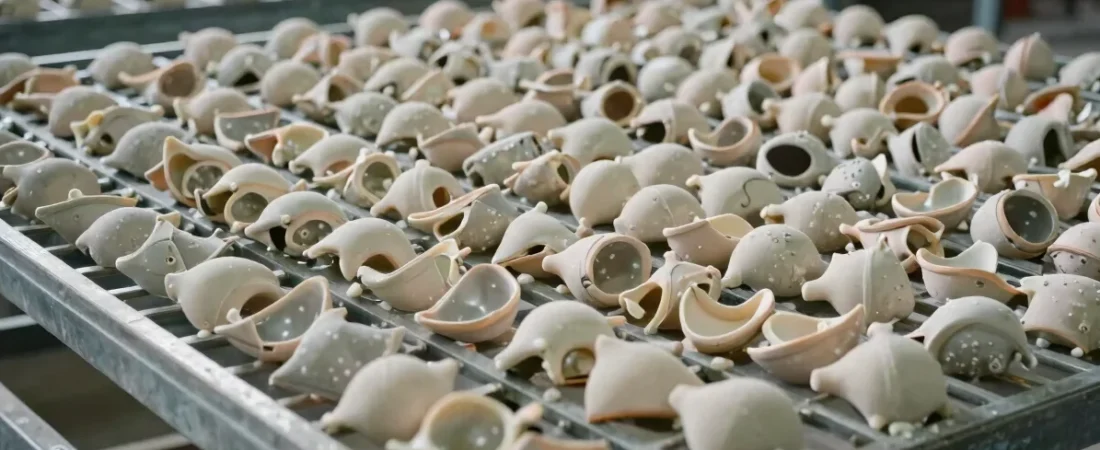
The ceramic shell is the mould that receives molten metal, but it is also a quality-control system. Its materials, thickness, drying conditions and firing cycle all influence the final casting.
The prime coat controls detail
The first ceramic layer sits directly against the wax pattern. It must reproduce fine geometry while remaining stable during dewaxing and pouring. A well-controlled prime coat supports better surface detail and can reduce burn-on and rough patches.
Backup coats add strength
Additional stucco-backed layers provide the shell strength needed for handling, dewaxing and metal filling. Too little build can increase the risk of cracking or run-out. Excessive build can make knockout harder and may affect fine edges.
Drying must be consistent
Temperature, humidity and air movement affect how each layer bonds to the previous one. Uneven drying can cause delamination, weak areas or hidden cracks. The correct window depends on the slurry system and the geometry of the pattern.
Firing removes residues
The burnout and firing cycle removes residual wax, dries the shell and stabilizes the mould before pouring. The cycle should be controlled and recorded, especially for thin-wall or pressure-tight castings.
When a project has narrow slots, deep cavities or thin sections, shell design deserves attention early in the quotation stage. It can influence both achievable quality and production yield.